How to Improve Body Control Through Calisthenics
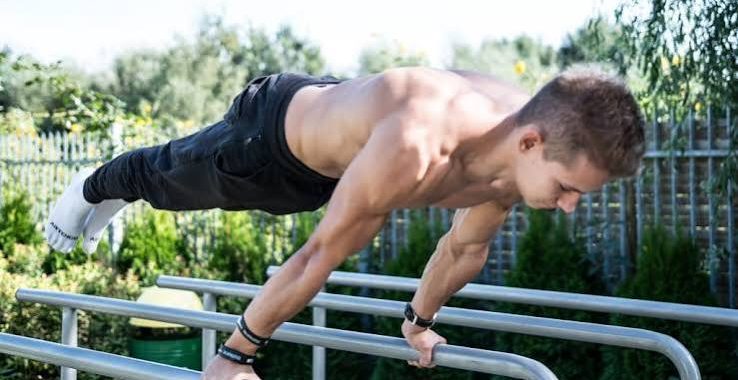
Body control is one of the most important skills in calisthenics. It allows you to move your body with strength, balance, stability, coordination, and confidence. Whether you are learning your first push-up or working toward advanced movements like a handstand, muscle-up, or planche, better body control can make your training more effective.
The good news is that body control is not something you either have or do not have. It can be developed through consistent practice and the right exercises. By focusing on technique, core stability, balance, mobility, and controlled movements, you can gradually become more comfortable and confident with your own body.
What Is Body Control?
Body control is your ability to understand, stabilize, and move your body accurately during physical activity. It involves several qualities working together, including balance, coordination, strength, flexibility, stability, and awareness.
In calisthenics, body control is especially important because many exercises require you to support and move your own body weight. A push-up, for example, is not simply about pushing yourself away from the floor. You also need to keep your core engaged, maintain a stable body position, control your movement, and coordinate several muscle groups at the same time.
Improving body control can help you perform exercises more efficiently and prepare you for more challenging calisthenics skills.
Why Is Body Control Important in Calisthenics?
Calisthenics depends heavily on your ability to control your body. Strong muscles are useful, but strength alone does not guarantee good movement.
Better body control can help you:
- Maintain proper exercise technique
- Improve balance and coordination
- Perform movements with greater stability
- Develop better awareness of your body position
- Learn advanced skills more effectively
- Move with greater confidence
- Reduce unnecessary movement during exercises
For example, someone may have enough strength to attempt a handstand but still struggle to maintain it because their balance and body positioning need more practice. This shows why strength and control should be developed together.
Start With Basic Bodyweight Movements
- If you want to improve body control, you do not need to immediately practice advanced skills. Basic exercises can provide an excellent foundation.
- Push-ups, squats, lunges, planks, mountain climbers, and controlled leg raises all require you to coordinate different parts of your body.
- Focus on performing each repetition slowly and correctly. Avoid rushing through movements simply to increase your repetition count.
- A controlled repetition teaches your body how to move with purpose. Over time, this can improve your coordination and movement quality.
Strengthen Your Core
- A strong and stable core is essential for body control. Your core helps connect your upper and lower body and allows you to maintain stable positions during different movements.
- Exercises such as planks, side planks, dead bugs, hollow body holds, and controlled leg raises can help develop core stability.
- During calisthenics exercises, think about keeping your body connected rather than allowing different parts to move independently without control.
- For example, during a push-up, maintaining a stable torso can help you avoid excessive movement through your hips and lower back.
Practice Balance
- Balance is another major part of body control. It becomes particularly important when you begin learning movements where your center of gravity changes.
- A simple way to develop balance is to practice exercises that challenge your stability. Single-leg stands, controlled lunges, and beginner handstand drills can help you become more comfortable controlling your body position.
- When practicing balance, focus on small adjustments rather than trying to remain perfectly still. Your body naturally makes tiny corrections to maintain stability.
- With regular practice, these adjustments can become more natural and controlled.
Slow Down Your Exercises
- One of the easiest ways to improve body control is to reduce the speed of your movements.
- Fast repetitions can sometimes hide weaknesses in technique. Slowing down forces you to remain aware of your body throughout the entire movement.
- Try controlling both the lifting and lowering portions of an exercise. For example, instead of quickly dropping during a push-up, lower yourself slowly and maintain a stable position.
- This type of training can improve muscular control and make basic exercises more challenging without requiring additional equipment.
Improve Your Mobility and Flexibility
- Good body control is not only about strength. Your joints also need enough mobility to move comfortably through the positions required by different exercises.
- Shoulder, wrist, hip, ankle, and spine mobility can all contribute to better movement.
- For example, wrist mobility can be useful for handstand practice, while hip and ankle mobility can support better squat positions.
- Include simple mobility exercises and stretching as part of your training routine. You do not need to spend hours doing them. A few consistent minutes can help you develop better movement quality over time.
Use Progressions Instead of Rushing
Advanced calisthenics movements require a combination of strength and control. Trying to jump directly into a difficult skill can make it harder to learn proper technique.
Instead, use progressions.
- For example, someone learning a handstand might begin with wall-supported positions before gradually working toward greater independence. Similarly, someone interested in a muscle-up should first develop strong pulling and pushing abilities.
- Progressions allow you to practice the movement pattern while gradually increasing the difficulty.
- The goal is not to perform the hardest variation as quickly as possible. Master each progression with patience, building the strength and control needed to confidently move on to the next challenge.
Focus on Body Awareness
- Body awareness means understanding where your body is positioned and how it is moving. This becomes increasingly important as calisthenics movements become more complex.
- During training, pay attention to your posture, joint position, balance, breathing, and muscle engagement.
Ask yourself questions such as:
- Am I keeping my body stable?
- Am I controlling the movement?
- Is my posture correct?
- Am I rushing the repetition?
This awareness can help you identify mistakes and make adjustments during your workouts.
Practice Isometric Exercises
- Isometric exercises involve holding a position without noticeable movement. They can be useful for developing strength and control because you need to maintain a specific body position for a period of time.
- Planks, hollow body holds, wall handstands, and support holds are examples of isometric exercises that can be included in calisthenics training.
- These movements teach you how to create tension and maintain stability rather than simply moving from one position to another.
- As your control improves, you can gradually work toward more challenging holds.
Train Consistently
- Body control develops through repetition and experience. You cannot expect major improvements after only a few sessions.
- Consistency allows your nervous system and muscles to become more familiar with specific movement patterns.
- You do not need to practice difficult skills every day. Instead, include body-control exercises regularly within your normal training routine and give your body enough time to recover.
- Even a few minutes of focused practice during a workout can become valuable when repeated consistently over several weeks and months.
Common Mistakes to Avoid
- When working on body control, beginners often focus too much on advanced movements and not enough on the basics.
- Avoid trying to progress faster than your current ability allows. Poor technique can make exercises less effective and may place unnecessary stress on your body.
- Another common mistake is ignoring recovery. Your muscles and nervous system need time to adapt to training.
- It is also important not to compare your progress with someone else’s. Different people have different starting points, training histories, mobility levels, and physical abilities.
- Focus on improving your own movement quality.
How Long Does It Take to Improve Body Control?
- There is no exact timeline for improving body control. Some people may notice better coordination and stability within a few weeks, while more advanced skills can require months or longer to develop.
- Your progress will depend on your consistency, current fitness level, training quality, recovery, and the difficulty of the skill you are learning.
- Instead of focusing only on how long it takes, look for small improvements. Maybe your plank feels more stable, your squat is more controlled, or your handstand balance has improved slightly.
- These small changes are signs that your body is learning.
Final Thoughts
Improving body control through calisthenics is a gradual process that combines strength, balance, coordination, mobility, stability, and body awareness. Start with simple exercises and focus on proper technique to gradually build the strength, control, and confidence needed for advanced calisthenics skills.
Focus on controlled movements, strengthen your core, practice balance, improve mobility, and use progressions when learning challenging skills. Most importantly, stay consistent and give yourself enough time to improve.
Calisthenics is not just about becoming stronger. It is about learning how to control the strength you have. With regular practice, you can move with greater confidence, precision, and control.