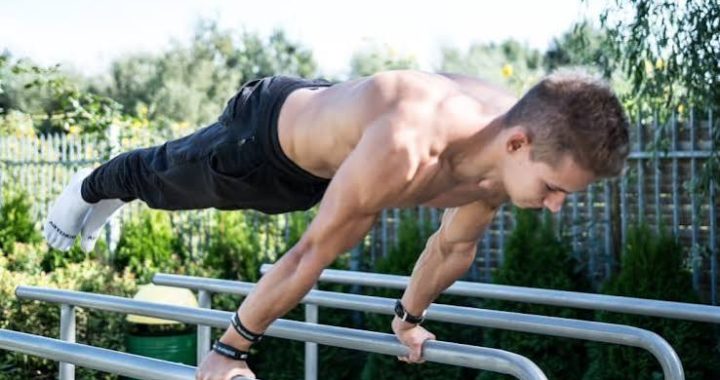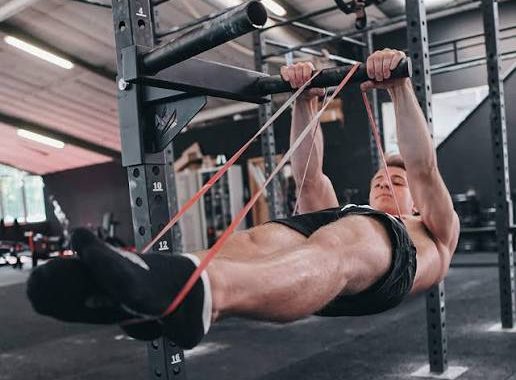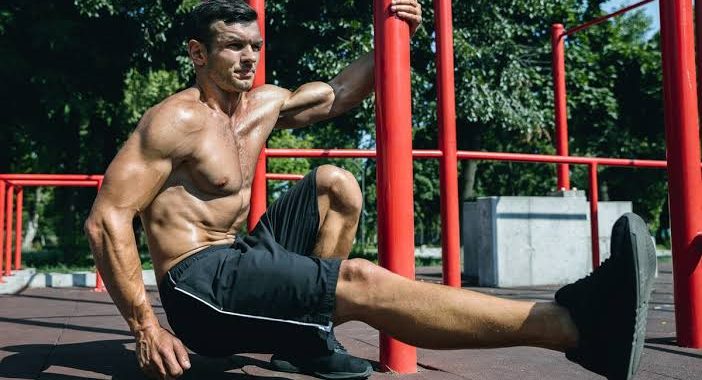
BEST WORKOUT FOR BEGINNERS

Best Calisthenics Workout for Beginners

Starting calisthenics can feel exciting, but it can also be confusing when you do not know which exercises to start with. You may see people performing advanced movements such as handstands, muscle-ups, and planches and wonder how you can reach that level.

The good news is that you do not need advanced skills when you are just starting. A beginner calisthenics workout should focus on simple bodyweight movements that help you build strength, control, balance, and confidence.

The best approach is to master the basics first and gradually make your training more challenging. With regular practice, proper technique, and enough recovery, you can build a strong foundation for more advanced calisthenics.

What Is Calisthenics?

Calisthenics is a type of resistance training that mainly uses your own body weight instead of traditional gym equipment.

Common exercises include:

  • Push-ups
  • Squats
  • Lunges
  • Rows
  • Pull-ups
  • Dips
  • Planks
  • Leg raises

These exercises can train several muscles at the same time while improving your ability to control your body.

One of the biggest advantages of calisthenics is its simplicity. You can perform many exercises at home, outdoors, or in a gym without needing expensive equipment.

Why Is Calisthenics Good for Beginners?

  • Calisthenics is beginner-friendly because many exercises can be modified according to your current strength.
  • For example, if a regular push-up is too difficult, you can begin with wall push-ups or incline push-ups. As you become stronger, you can gradually move toward standard push-ups.
  • This allows you to progress at your own pace instead of trying to perform exercises that are currently too difficult.

Calisthenics can help beginners:

  • Build basic strength
  • Improve body control
  • Develop balance
  • Strengthen the core
  • Improve mobility
  • Increase muscular endurance
  • Build confidence
  • Learn proper movement patterns
  • How Often Should Beginners Do Calisthenics?

Consistent training and proper recovery are more important than working out every day.

For most beginners, two to three workouts per week can be a practical starting point. This gives your body enough time to recover between demanding sessions.

For example:

  • Monday: Full-body workout
  • Tuesday: Rest
  • Wednesday: Full-body workout
  • Thursday: Rest
  • Friday: Full-body workout
  • Saturday: Light activity or mobility
  • Sunday: Rest

You can adjust this schedule according to your lifestyle and recovery.

Consistency is more important than trying to train as often as possible.

Start With a Warm-Up

Start your workout with a short warm-up to prepare your muscles, joints, and body for exercise.

A warm-up can increase movement readiness and help you feel more comfortable during your exercises.

You can include:

  • Arm circles
  • Shoulder rolls
  • Wrist movements
  • Hip circles
  • Bodyweight squats
  • Light jogging
  • Easy jumping jacks

Keep your warm-up simple. Around five to ten minutes is usually enough for a beginner session.

Push-Ups

  • Push-ups are one of the best exercises for beginners because they train several upper-body muscles at once.
  • They mainly work the chest, shoulders, and triceps while your core helps keep your body stable.
  • If you cannot perform a regular push-up yet, start with an easier variation.

You can progress through:

  • Push-Up Progression: Wall → Incline → Knee → Standard Push-Up
  • Focus on controlled movement rather than trying to complete as many repetitions as possible.
  • Keep your body aligned and avoid allowing your hips to drop or rise excessively.

Bodyweight Squats

  • Squats are a basic lower-body movement that every beginner should learn.
  • They primarily work your legs and glutes while also requiring core stability.
  • Start with a comfortable stance and keep your chest controlled as you lower your body. Try to move smoothly rather than rushing through each repetition.
  • As your strength improves, gradually increase repetitions or progress to more challenging squat variations.

Lunges

  • Lunges are another useful exercise for developing lower-body strength and balance.
  • They work the legs and glutes while requiring you to control your body through a single-leg movement.
  • If standard lunges feel unstable, hold onto something for support while learning the movement.
  • As your balance improves, you can perform lunges without assistance and eventually explore more challenging variations.

Glute Bridges

  • Lie comfortably on your back, bend your knees, and keep both feet firmly planted on the floor.
  • Get into position by lying on your back, bending your knees, and placing your feet flat on the ground.Lift your hips while keeping your movement controlled, then lower them slowly.
  • Focus on using your glutes rather than simply moving your hips as quickly as possible.
  • This exercise can also be useful for beginners who spend a lot of time sitting during the day.

Rows

  • Pulling exercises are important because a balanced routine should train both pushing and pulling movements.
  • Bodyweight rows can help beginners develop the back and arms while preparing them for more demanding pulling exercises.
  • If you have access to a secure low bar or suitable equipment, rows can be adjusted to match your current strength.
  • As you become stronger, you can work toward assisted pull-ups, negative pull-ups, and eventually your first full pull-up.

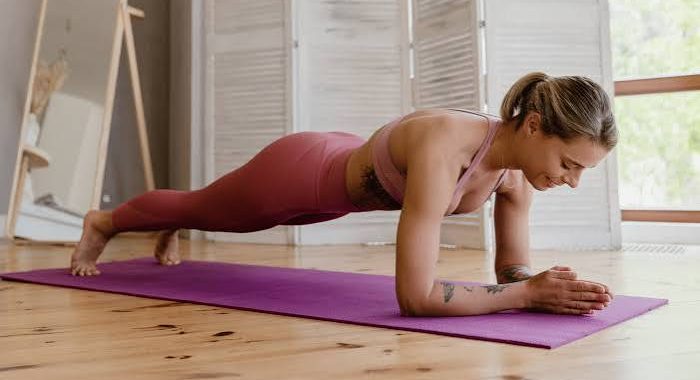
Planks

  • A strong core helps you control your body during many calisthenics exercises.
  • Planks are a simple starting point for developing core endurance.
  • Keep your body in a straight line and avoid letting your hips drop toward the floor.
  • Instead of holding the position for as long as possible, focus on maintaining good form.
  • As your core becomes stronger, you can gradually increase your holding time.

Beginner Calisthenics Workout

You can combine these exercises into a simple full-body session.

Beginner Workout

1. Incline or regular push-ups
2–3 sets of 6–12 repetitions

2. Bodyweight squats
2–3 sets of 10–15 repetitions

3. Bodyweight rows
2–3 sets of 6–12 repetitions

4. Lunges
2–3 sets of 8–12 repetitions per leg

5. Glute bridges
2–3 sets of 10–15 repetitions

6. Plank
2–3 sets of 20–40 seconds

Rest for around 60–120 seconds between sets, adjusting the rest period according to your fitness level.

You do not need to perform every exercise at maximum effort. The goal is to learn the movements, build a training habit, and gradually become stronger.

How to Progress as a Beginner?

Your first workout will eventually become easier. When that happens, you need to give your muscles a new challenge.

This is called progressive overload.

You can progress by:

  • Adding repetitions
  • Adding another set
  • Improving your technique
  • Slowing down each repetition
  • Using a harder exercise variation
  • Reducing assistance

For example, if you start with incline push-ups, you might eventually progress to regular push-ups and then more challenging variations.

The goal is not to make every workout extremely difficult. Instead, increase the challenge gradually as your ability improves.

Do Not Ignore Pulling Exercises

Many beginners focus heavily on push-ups and squats but forget about pulling movements.

A balanced calisthenics routine should include both pushing and pulling exercises.

Pulling movements can strengthen:

  • Upper back
  • Lats
  • Biceps
  • Forearms
  • Grip

If you cannot perform a pull-up yet, do not worry. Start with rows, dead hangs, assisted pull-ups, and negative pull-ups.

Over time, these exercises can help you develop the strength needed for your first full repetition.

Recovery Is Part of Training

Beginners sometimes believe that training every day will produce faster results. In reality, your body needs time to recover after challenging exercise.

During recovery, your body adapts to the training stimulus and prepares for your next session.

Focus on:

  • Getting enough sleep
  • Eating nutritious food
  • Drinking enough water
  • Taking rest days
  • Avoiding excessive training

Recovery becomes especially important when you start increasing your workout intensity.

Common Beginner Mistakes

Avoiding common mistakes can make your calisthenics journey easier.

Some beginners:

  • Try advanced skills too early
  • Focus on repetitions instead of technique
  • Train without enough recovery
  • Ignore their legs
  • Avoid pulling exercises
  • Change their routine too frequently
  • Expect results immediately
  • Compare their progress with others

Instead, focus on mastering basic movements and improving gradually.

Your starting point does not matter as much as the direction you are moving in.

Frequently Asked Questions

Is calisthenics good for complete beginners?

Yes. Calisthenics can be adapted to different fitness levels, making it suitable for people who are new to exercise.

How many days a week should a beginner do calisthenics?

Two to three full-body workouts per week can be a good starting point. You can increase training frequency as your fitness and recovery improve.

Can beginners build muscle with calisthenics?

Yes. Challenging bodyweight exercises can stimulate muscle development, especially when you gradually increase the difficulty of your training.

Do I need equipment?

No. Many beginner exercises require no equipment. However, a pull-up bar, resistance bands, or gymnastic rings can give you more options as you progress.

How long should a beginner workout last?

A focused workout of around 30–60 minutes can be enough for many beginners. The quality of your training matters more than making the workout unnecessarily long.

Why Choose ZENITHCALIS?

At ZENITHCALIS, we believe that everyone should have the opportunity to become stronger using simple and practical training methods.

Whether you are learning your first push-up, building the strength for your first pull-up, or simply trying to become more active, our goal is to make calisthenics easier to understand.

Start with the basics, focus on good technique, and build your strength one step at a time.

Final Thoughts

The best calisthenics workout for beginners does not need to be complicated. A combination of push-ups, squats, lunges, rows, glute bridges, and core exercises can provide a strong foundation for your fitness journey.

Start with exercises that match your current ability and focus on performing each movement with control. As you become stronger, gradually increase repetitions, sets, or exercise difficulty.

Most importantly, be patient with yourself. You may not perform a perfect push-up or pull-up on your first attempt, and that is completely normal.

Train consistently, master the basics, recover properly, and keep progressing. Your strongest version is built one repetition at a time.

WORKOUT TIMELINE

How Often Should You Work Out?

If you’re new to fitness, you may be wondering how many times you should work out each week?It sounds like a simple question, but the answer depends on your fitness level, goals, workout intensity, recovery, and daily routine.

Some people believe they need to exercise every day to see results, while others think one or two workouts a week are enough. The truth is somewhere in between. You do not need to train every day to become stronger or fitter. What matters more is finding a routine that challenges your body while giving you enough time to recover.

For people interested in calisthenics, strength, muscle building, or general fitness, a consistent weekly schedule can make a major difference.

How Many Workout Days Do You Really Need?

The right number of workout days depends on your goals, fitness level, and recovery.

For many beginners, three days per week can be a great starting point. This gives you enough training time to practice movements while still leaving plenty of room for recovery.

As your fitness improves, you may feel comfortable training four or five days per week. However, training more often does not automatically mean better results.

Your workout frequency should match your ability to recover.

For example:

  • Beginners: around 2–3 training days per week
  • Intermediate trainees: around 3–5 days per week
  • Advanced trainees: frequency can vary depending on training volume and goals

The important thing is to avoid copying someone else’s schedule without considering your own needs.

How Often Should Beginners Work Out?

If you are new to exercise, starting slowly is usually a smart approach.

Your muscles, joints, and nervous system need time to become familiar with training. Jumping into intense workouts every day can leave you extremely sore and may make it difficult to stay consistent.

A beginner can start with two or three workouts per week and gradually increase training frequency as their body adapts.

For example, you could train on:

  • Monday
  • Wednesday
  • Friday

This gives you a rest day between sessions while allowing you to build a regular habit.

You do not need a complicated routine in the beginning. Focus on learning proper technique and becoming comfortable with basic movements.

How Often Should You Do Calisthenics?

Calisthenics can be performed several times per week, but your schedule should depend on how demanding your sessions are.

If you are doing challenging exercises such as pull-ups, dips, difficult push-up variations, and advanced leg movements, your muscles may need more recovery time.

If your sessions are lighter and focused on mobility, technique, or skill practice, you may be able to train more frequently.

A balanced calisthenics routine can include:

  • Push movements
  • Pull movements
  • Leg exercises
  • Core training
  • Mobility work
  • Skill practice

You do not need to train every muscle intensely every day.

Is Daily Exercise Right for You?

Training every day isn’t always the best way to make progress.

Your body needs recovery, especially after demanding resistance training. Training the same muscles intensely every day may prevent you from performing at your best.

However, “working out every day” does not necessarily mean doing a hard workout every day.

You could combine harder training days with lighter activities such as:

  • Walking
  • Stretching
  • Mobility exercises
  • Light cardio
  • Easy skill practice

This approach allows you to stay active while reducing the stress placed on your muscles.

How Many Times a Week Should You Train for Muscle Growth?

  • If muscle growth is your main goal, training frequency should give each muscle enough stimulus while also allowing sufficient recovery.
  • Many people find that training a muscle group around two times per week works well, although the ideal frequency can vary.
  • For calisthenics, you could use a full-body approach several times per week or divide your training into different sessions.

For example:

Full Body

Train major muscle groups during each workout with rest days between demanding sessions.

Upper and Lower Body

Alternate upper-body and lower-body sessions throughout the week.

There is no need to train until you are completely exhausted every time. The key is to make your training challenging while keeping it manageable for the long term.

How Often Should You Train If You Want to Build Strength?

  • Strength development requires consistent practice.
  • Practicing movements like push-ups, pull-ups, dips, squats, and handstands consistently can help you become stronger and more confident with your technique.
  • However, more practice does not always mean doing maximum-effort repetitions every day.

For example, you might perform challenging pull-up training two or three times per week while using other days for easier technique work.

How Long Should a Workout Last?

  • Workout length can vary depending on your goals and training style.
  • A useful workout does not need to last two hours.
  • For many people, a focused session of around 30–60 minutes can be enough to complete an effective workout.
  • The quality of your training matters more than simply spending a long time exercising.

A good session should give you enough time to:

  • Warm up
  • Perform your main exercises
  • Complete supporting movements
  • Practice technique or skills
  • Cool down if needed

If you are constantly adding exercises just to make your workout longer, you may be doing more than necessary.

Recovery Is Just as Important as Training

One of the biggest mistakes beginners make is thinking that more training always leads to faster progress.

Rest and recovery are essential for your body to adapt and grow stronger.During recovery, your muscles repair themselves and adapt to the stress created by training.

Good recovery habits include:

  • Getting enough sleep
  • Eating nutritious meals
  • Drinking enough water
  • Taking rest days
  • Managing workout intensity
  • Avoiding excessive training volume

If you feel unusually tired for several days, your performance is declining, or your body is constantly sore, it may be a sign that you need more recovery.

How Many Rest Days Should You Take?

  • The number of rest days you need depends on your training schedule and recovery ability.
  • Taking regular rest days can help beginners recover and adapt to training. As you become more experienced, you may train more frequently while adjusting the intensity of each session.
  • A rest day does not necessarily mean sitting completely still.

Try these low-intensity activities on your recovery days:

  • Walking
  • Gentle stretching
  • Light mobility
  • Easy cycling
  • Relaxing activities

The goal is to give your body a break from demanding training.

How to Know If You Are Training Too Much?

More exercise is not always better.

Watch for signs that your training schedule may be too demanding:

  • Constant fatigue
  • Poor workout performance
  • Persistent muscle soreness
  • Lack of motivation
  • Difficulty sleeping
  • Irritability
  • Repeated minor injuries
  • Feeling exhausted before workouts

If you notice several of these signs, consider reducing your training volume or adding more recovery time.

How to Create a Workout Schedule?

Creating a schedule becomes easier when you start with your goal.

If you are a beginner, you could begin with three training days each week.

For example:

  • Monday: Full-body workout
  • Tuesday: Rest or light activity
  • Wednesday: Full-body workout
  • Thursday: Rest
  • Friday: Full-body workout
  • Saturday: Light activity or mobility
  • Sunday: Rest


  • This is only an example. Your actual schedule should depend on your fitness level and lifestyle.
  • If you are busy, even two consistent workouts each week can be a useful starting point.
  • The best schedule is one you can actually follow.

Consistency Matters More Than Perfection

  • You do not need to have a perfect workout schedule to make progress.
  • Missing one workout will not destroy your results. What matters is what you do consistently over weeks and months.
  • Instead of thinking, “I missed Monday, so my whole week is ruined,” simply return to your routine at the next opportunity.
  • Fitness is a long-term process.
  • Small improvements made consistently can eventually lead to major changes in your strength, fitness, and physique.

How Frequently Should You Train the Same Muscles?

  • Usually, there is no need to train the same muscle group intensely every day.
  • Your muscles need time to recover after challenging resistance training. Instead of repeatedly exhausting the same muscles, you can alternate muscle groups or use different training focuses.
  • For example, one day could emphasize upper-body strength while another focuses more on legs and core.
  • This can help you maintain training frequency without constantly placing the same muscles under heavy stress.

Tips for Better Workout Frequency

Here are some important things to consider before you begin training:

  • Start with a manageable number of workout days.
  • Increase training frequency gradually.
  • Give your muscles enough recovery time.
  • Avoid training hard every day.
  • Focus on exercise quality.
  • Adjust your routine when your schedule changes.
  • Get enough sleep.
  • Eat well and stay hydrated.
  • Track your progress.
  • Stay consistent.

Remember that your workout schedule should support your lifestyle, not make your life harder.

Frequently Asked Questions

How Much Training Is Enough for Beginners?

For many beginners, two to three workout sessions per week can be a practical starting point. You can gradually increase frequency as your fitness and recovery improve.

Can I work out every day?

You can stay active every day, but you do not need to perform intense workouts every day. Mixing demanding sessions with lighter activities and recovery days can be a better approach.

How often should I do calisthenics?

Many people can perform calisthenics around three to five days per week depending on workout intensity, experience, and recovery. Beginners can start with fewer sessions.

How many rest days do I need?

There is no fixed number for everyone. Your rest needs depend on your training intensity, fitness level, sleep, nutrition, and overall recovery.

Can I build muscle by working out three days a week?

You don’t need to train every day; three focused workouts per week can support strength and muscle development with proper nutrition and recovery.
Is a 30-minute workout enough?

Yes. A focused 30-minute session can be effective if you use your time efficiently and perform exercises that match your goals.

Why Choose ZENITHCALIS?

At ZENITHCALIS, we believe that effective training does not have to be complicated. Our goal is to help you understand calisthenics, strength training, recovery, and fitness in a simple and practical way.

From your first push-up to advanced calisthenics skills, consistent practice and steady progression can help you build strength, improve your abilities, and achieve your fitness goals.

CALISTHENICS VS WEIGHTS FOR MUSCLE GROWTH

Calisthenics vs Weights for Muscle Growth

When it comes to building muscle, two popular training methods often come into the conversation: calisthenics and weight training. Calisthenics uses your body weight as resistance, while weight training uses equipment such as dumbbells, barbells, and machines.

Both methods can help you become stronger and develop muscle, but they work in slightly different ways. The better choice depends on your goals, experience, available equipment, and the type of physique you want to build.

If your main goal is muscle growth, understanding the strengths and limitations of both methods can help you choose a training style that works for you.

What Is Calisthenics?

  • Calisthenics is a form of resistance training that primarily uses your own body weight.
  • These movements can train multiple muscle groups at once while also improving balance, coordination, and body control.
  • As you become stronger, you can progress from basic exercises to more challenging variations. For example, regular push-ups can eventually lead to decline push-ups, archer push-ups, or other advanced variations.
  • Calisthenics is especially popular among people who want a lean, athletic, and functional physique.

What Is Weight Training?

Weight training involves using external resistance to challenge your muscles. This can include free weights such as dumbbells and barbells or resistance machines.

Common exercises include:

  • Bench presses
  • Squats
  • Deadlifts
  • Rows
  • Shoulder presses
  • Bicep curls
  • Tricep extensions

One major advantage of weight training is that you can increase resistance in small and measurable amounts. This makes it relatively straightforward to progressively challenge your muscles as you get stronger.

Can Both Build Muscle?

Yes. Both calisthenics and weight training can support muscle growth.

Muscle growth occurs when your muscles receive enough training stimulus and then have the nutrition and recovery needed to adapt.The resistance does not necessarily have to come from a barbell. Your body weight can provide plenty of resistance, especially when you use challenging movements.

However, the way you increase resistance is different between the two methods.With weights, you can often add a small amount of weight to an exercise. With calisthenics, you may need to change the exercise variation, body position, range of motion, or eventually add external resistance.

Calisthenics for Muscle Growth

  • Calisthenics can be very effective for building muscle, especially for beginners and intermediate trainees.
  • Exercises such as pull-ups, dips, push-ups, and challenging leg movements can provide significant resistance.
  • One advantage is that many calisthenics exercises train several muscles together.
  • For example, a pull-up works the back and biceps while also requiring grip and core control. A dip can train the chest, shoulders, and triceps at the same time.
  • This combination can help you build muscle while developing useful body control.

Benefits of Calisthenics

Calisthenics offers several advantages for people interested in muscle growth:

  • Requires little or no equipment
  • Can be performed almost anywhere
  • Develops body control
  • Improves balance and coordination
  • Builds functional strength
  • Can develop a lean and athletic physique
  • Allows progression through exercise variations
  • Can be convenient for beginners

Another advantage is that calisthenics can make training feel more like skill development. Learning your first pull-up, dip, handstand, or advanced movement can be motivating because you are not only building muscle but also improving what your body can do.

Limitations of Calisthenics for Muscle Growth

  • Although calisthenics can build muscle, progressing resistance can sometimes become more difficult.
  • For example, if regular push-ups become too easy, you cannot simply increase your body weight by a small amount whenever you want.
  • Instead, you may need to move to a more difficult variation.
  • This can create large jumps in difficulty between exercises. Some advanced movements also require significant skill, balance, or joint strength, which can make them less practical if your only goal is muscle growth.
  • Adding a weighted vest, resistance bands, or other external resistance can help solve this problem.

Benefits of Weight Training

  • Weight training has one major advantage for hypertrophy: resistance is easy to adjust.
  • If you can bench press a certain weight comfortably, you can gradually increase the load as your strength improves.
  • This makes progressive overload straightforward.
  • Weight training also provides many exercises that allow you to focus on individual muscle groups. For example, curls can directly target the biceps, while lateral raises can focus on the shoulders.

Other benefits include:

  • Easy resistance progression
  • Many exercise options
  • Simple tracking of strength improvements
  • Useful for targeting specific muscles
  • Effective for building muscle mass
  • Suitable for different fitness levels

This makes weight training a popular choice for people whose primary goal is maximizing muscle size.

Limitations of Weight Training

  • Weight training can be highly effective, but it also has some drawbacks.
  • You may need access to a gym or home equipment, which can make it more expensive than basic calisthenics.
  • Some people also find traditional weight training repetitive or less enjoyable than bodyweight movements.
  • Another consideration is that equipment does not automatically guarantee good results. Proper technique, consistent training, nutrition, and recovery still matter.

Which Is Better for Muscle Growth?

  • There is no universal winner.
  • If your primary goal is maximizing muscle size, weight training can make progressive overload easier because you can adjust resistance in small increments.
  • However, calisthenics can still produce excellent muscle development, especially when exercises are challenging and progression is planned properly.
  • Your personal preference also matters. The best training method is often the one you enjoy enough to follow consistently.

Progressive Overload in Both Methods

Progressive overload is important whether you train with weights or body weight.

With weight training, you can progress by:

  • Adding weight
  • Increasing repetitions
  • Adding sets
  • Improving technique
  • Increasing range of motion

With calisthenics, you can progress by:

  • Increasing repetitions
  • Adding sets
  • Using harder variations
  • Increasing range of motion
  • Slowing repetitions
  • Reducing assistance
  • Adding external resistance

The principle is the same: gradually make your training more challenging as your body adapts.

Nutrition Matters More Than the Equipment

  • Your choice between calisthenics and weights is only one part of muscle growth.
  • Nutrition plays a major role as well.
  • Your body needs enough protein, energy, carbohydrates, healthy fats, vitamins, and minerals to support training and recovery.
  • Try to include a protein-rich food in your meals throughout the day.

Recovery Is Essential

Giving your muscles enough time to recover after training is important for progress.

Regardless of whether you perform push-ups or bench presses, repeatedly stressing your muscles without adequate recovery can make it harder to perform well.

Focus on:

  • Getting enough sleep
  • Eating nutritious food
  • Staying hydrated
  • Taking rest days
  • Managing training volume
  • Avoiding unnecessary overtraining

Recovery is not wasted time. It is part of your overall training process.

Can You Combine Calisthenics and Weights?

Absolutely.

Combining both methods can give you the advantages of each.

For example, you might use weight training for exercises where you want precise resistance progression and calisthenics for movements that develop body control and functional strength.

A mixed approach could include:

  • Weighted squats
  • Pull-ups
  • Bench presses
  • Dips
  • Rows
  • Push-ups
  • Lunges
  • Core exercises

You can adjust the combination based on your goals and preferences.

Which One Should You Choose?

Choose calisthenics if you:

  • Prefer training with minimal equipment
  • Want to improve body control
  • Enjoy learning skills
  • Want a flexible workout style
  • Prefer training at home or outdoors

Choose weights if you:

  • Primarily want to maximize muscle size
  • Prefer measurable resistance increases
  • Enjoy targeting individual muscles
  • Have access to gym equipment
  • Want more control over resistance levels

You can also choose both if you enjoy each style.

Frequently Asked Questions

Is calisthenics or weight training better for muscle growth?

Both can build muscle. Weight training makes progressive overload easier, while calisthenics can build muscle alongside body control, coordination, and functional strength.

Can calisthenics build as much muscle as weights?

Calisthenics can build significant muscle, but maximizing muscle size can become more challenging once basic exercises are no longer difficult enough. Adding resistance or advanced variations can help.

Do I need weights to build muscle?

No. You can build muscle through challenging bodyweight exercises when you progressively increase the difficulty and support your training with proper nutrition and recovery.

Can beginners start with calisthenics?

Yes. Beginners can start with easier variations and gradually progress toward more challenging movements.

Can I combine calisthenics and weights?

Yes. Combining both can provide a useful mix of muscle-building resistance, body control, and functional strength.

Why Choose ZENITHCALIS?

At ZENITHCALIS, we believe there is no single path to becoming stronger. Calisthenics gives you the opportunity to develop muscle, body control, strength, and confidence using your own body as resistance.

Our goal is to make fitness easier to understand and help you progress from basic movements to more advanced training. Whether you prefer bodyweight exercises, weights, or a combination of both, consistency and smart progression are what matter most.

Final Thoughts

The debate between calisthenics and weights for muscle growth does not have to be about choosing one side.

Both methods can help you develop muscle when you train consistently, progressively challenge your muscles, eat well, and recover properly.

Weights provide an easy way to increase resistance, making them particularly useful for people focused on maximizing muscle size.Calisthenics combines muscle building with better body control, balance, and practical strength, often using little to no equipment.

The best option is the one that fits your goals, lifestyle, and preferences. And if you enjoy both, there is nothing stopping you from combining them.

Ultimately, your results will come from consistent training, progressive overload, proper nutrition, and patience rather than the equipment you choose.

IMPORTANCE OF MUSCLE GROWTH

Understanding Muscle Growth: Benefits and Importance

Muscle growth is one of the main goals for people who train, whether they are interested in calisthenics, gym workouts, sports, or simply becoming stronger. But muscle growth is about much more than making your muscles look bigger. Building muscle can improve strength, physical performance, posture, body control, and overall fitness.

Muscle growth happens when your muscles gradually adapt to the demands placed on them during resistance training. Calisthenics exercises such as push-ups, pull-ups, dips, squats, and lunges can provide this resistance using your own body weight.

Understanding how muscle growth works can help you train smarter, eat better, and avoid expecting results overnight.

What Is Muscle Growth?

Muscle growth, commonly called hypertrophy, is the process through which muscle fibers increase in size as your body adapts to resistance training.

When you challenge your muscles during exercise, they experience stress. Your body responds by repairing and adapting to that stress. When you train consistently and give your body enough time to recover, your muscles can grow stronger over time.

Muscle growth does not happen after one workout. It comes from staying consistent with your training and giving your body time to recover.

Several factors influence this process, including:

  • Training intensity
  • Progressive overload
  • Nutrition
  • Protein intake
  • Sleep
  • Recovery
  • Genetics
  • Training consistency

All of these factors work together to support long-term development.

How Does Muscle Growth Happen?

  • When you perform resistance exercises, your muscles are placed under tension. This creates a training stimulus that tells your body it needs to adapt.
  • Your body begins recovering and rebuilding after each training session. It uses nutrients from your diet to support muscle repair and adaptation.
  • If you repeatedly provide an appropriate challenge and allow enough recovery, your muscles can become stronger and gradually increase in size.
  • This is why simply exercising once in a while is unlikely to produce major muscle growth. Your body needs a consistent reason to adapt.

Why Is Muscle Growth Important?

Muscle growth is important for more than appearance. Stronger and well-developed muscles can support many aspects of physical fitness and everyday movement.

Some important benefits include:

  • Improved strength
  • Better physical performance
  • Greater body control
  • Improved posture
  • Stronger joints and supporting muscles
  • Better muscular endurance
  • Increased confidence
  • Improved overall fitness

Building muscle can also make everyday activities feel easier because your body becomes better equipped to handle physical demands.

Muscle Growth and Strength

  • Muscle size and strength are closely related, although they are not exactly the same thing.
  • As your muscles develop, you may become better at producing force. This can help you perform exercises such as push-ups, pull-ups, squats, and dips with greater control.
  • In calisthenics, strength is particularly important because many advanced movements require you to control your entire body.
  • For example, progressing toward movements such as handstands, muscle-ups, and advanced push-up variations requires a strong foundation.
  • Building muscle can therefore support your journey toward more challenging skills.

Progressive Overload Is Essential

Muscle growth depends heavily on gradually making your workouts more challenging.

Your muscles adapt when they are challenged, so you need to gradually increase the difficulty of your training as you become stronger.

With calisthenics, you can create progressive overload by:

  • Increasing repetitions
  • Adding more sets
  • Choosing harder exercise variations
  • Increasing your range of motion
  • Slowing down repetitions
  • Improving movement control
  • Reducing assistance
  • Adding resistance when appropriate

For example, you might begin with incline push-ups, progress to regular push-ups, and eventually move toward more difficult variations.

The goal is to gradually give your muscles a greater challenge without sacrificing proper form.

The Role of Protein

Protein plays an important role in muscle development because it provides amino acids that your body uses to repair and maintain muscle tissue.

Try to include a protein-rich food in your meals throughout the day.

However, protein is only one part of nutrition. Your overall diet should also provide enough carbohydrates, healthy fats, vitamins, minerals, and calories to support your training and recovery.

Recovery Is Essential

Your muscles do not grow simply because you train harder and harder. Recovery is an important part of the process.

After a demanding workout, your body needs time to repair and adapt. If you constantly train without enough recovery, you may experience excessive fatigue and struggle to perform at your best.

Good recovery habits include:

  • Getting enough sleep
  • Taking rest days
  • Eating nutritious meals
  • Staying hydrated
  • Managing training intensity
  • Avoiding unnecessary overtraining

Giving your body enough time to recover is just as important as the workout itself.

Muscle Growth Through Calisthenics

Calisthenics can be an effective way to support muscle development because many exercises use your body weight as resistance.

Some useful movements include:

Push-Ups

Push-ups work the chest, shoulders, and triceps while also requiring core stability. As you become stronger, harder variations can increase the challenge.

Pull-Ups

Pull-ups are excellent for developing the back, biceps, and grip. Beginners can use rows, assisted pull-ups, and negative pull-ups to build the necessary strength.

Dips

Dips are a great exercise for working the chest, shoulders, and triceps. They can become more challenging as your strength improves.

Squats

Squats help develop the legs and glutes. More challenging variations can be introduced when basic squats become too easy.

Lunges

Lunges train the lower body while also requiring balance and coordination.

Using different movements allows you to develop a more balanced physique rather than focusing on one muscle group.

Muscle Growth and Body Composition

  • Building muscle can influence the way your body looks and performs.
  • More developed muscles can contribute to a stronger and more athletic appearance. However, muscle definition also depends on factors such as body fat levels, genetics, nutrition, and overall activity.
  • This is why gaining muscle and losing body fat are separate processes, even though they can both contribute to changes in body composition.
  • Instead of focusing only on the number on the weighing scale, consider other signs of progress such as increased strength, improved exercise performance, better technique, and changes in how your clothes fit.

How Long Does Muscle Growth Take?

Muscle growth takes time, and there is no exact timeline that applies to everyone.

Beginners may notice improvements in strength relatively quickly because their bodies are adapting to a new training stimulus. Visible changes in muscle size usually take longer.

Your progress can depend on:

  • Age
  • Genetics
  • Training experience
  • Nutrition
  • Sleep
  • Recovery
  • Training consistency
  • Exercise selection

Rather than expecting dramatic changes within a few weeks, focus on gradual improvement over several months.

Consistency matters more than trying to make rapid progress.

Common Mistakes That Can Limit Muscle Growth

Some training habits can make muscle growth more difficult.

Common mistakes include:

  • Doing the same easy exercises for too long
  • Ignoring progressive overload
  • Training without proper technique
  • Not eating enough nutritious food
  • Neglecting protein
  • Getting insufficient sleep
  • Training too frequently
  • Ignoring certain muscle groups
  • Expecting instant results
  • Frequently changing workout routines

A simple and consistent approach is often more effective than constantly searching for a new training method.

Tips to Support Muscle Growth

If you want to support healthy muscle development, keep these simple principles in mind:

  • Train consistently.
  • Focus on proper technique.
  • Increase difficulty gradually.
  • Challenge all major muscle groups.
  • Eat a balanced diet.
  • Include enough protein.
  • Stay hydrated.
  • Get quality sleep.
  • Allow enough recovery.
  • Track your progress.
  • Stay patient.

Small improvements repeated over time can make a big difference.

Frequently Asked Questions

What is muscle growth?

Muscle growth, or hypertrophy, is the process in which muscles gradually increase in size as they adapt to resistance training and proper recovery.

Can calisthenics help build muscle?

Yes. Calisthenics can support muscle growth when bodyweight exercises provide enough resistance and the training becomes progressively more challenging.

How important is protein for muscle growth?

Protein is important because it provides amino acids that your body needs to maintain and repair muscle tissue. However, a balanced diet and adequate overall nutrition are also important.

Does muscle grow while you exercise?

Exercise provides the stimulus for adaptation, but recovery is an important part of the process. Your body needs time and nutrients to repair and adapt after training.

How long does it take to build muscle?

The timeline varies from person to person. Strength improvements can appear relatively quickly, while noticeable muscle growth generally requires consistent training and nutrition over a longer period.

Why Choose ZENITHCALIS?

At ZENITHCALIS, we believe that understanding your training is just as important as doing it. Our goal is to make calisthenics and muscle development easier to understand for beginners and experienced athletes alike.

Whether you are learning your first push-up, working toward your first pull-up, or building a stronger physique, we focus on practical information that can help you train with greater confidence and consistency.

Final Thoughts

Muscle growth is a gradual process that requires more than simply working out. Your muscles need a consistent training stimulus, proper nutrition, enough protein, quality sleep, and adequate recovery.

Calisthenics can be a powerful way to develop muscle while also improving strength, balance, coordination, and body control. Start with exercises that match your current ability, gradually increase the challenge, and give your body enough time to adapt.

Most importantly, do not rush the process. Muscle growth takes patience, but every stronger repetition and improved movement is a sign that you are progressing. Stay consistent, take care of your body, and focus on becoming stronger one step at a time.

BUILD CALISTHENICS PHYSIQUE

How to Build a Solid Calisthenics Physique

A solid calisthenics physique is not just about having visible muscles. It is about developing a body that looks strong, balanced, athletic, and capable. Calisthenics uses your own body weight as resistance, making exercises such as push-ups, pull-ups, dips, squats, lunges, and core movements the foundation of training.

One of the biggest advantages of calisthenics is that you can build strength and muscle without depending on a large collection of gym equipment. However, getting a well-developed physique requires more than simply doing random bodyweight exercises. You need consistent training, progressive overload, good nutrition, proper recovery, and patience.

If you want to build a solid calisthenics physique, the goal should be to improve your entire body rather than focusing on one particular muscle group.

What Is a Calisthenics Physique?

A calisthenics physique generally refers to a lean, muscular, and athletic body developed through bodyweight training.

It often includes:

  • Strong shoulders
  • A developed chest
  • A wider and stronger back
  • Defined arms
  • A stable core
  • Strong legs
  • Good posture
  • Balanced muscle development

Unlike focusing only on size, calisthenics also emphasizes body control and movement quality. Your goal is not simply to look strong but to become stronger and more capable.

Start With the Basic Exercises

Start with the fundamentals and build your strength before taking on harder movements.

Some of the most useful exercises include:

Push-Ups

Push-ups are excellent for developing the chest, shoulders, and triceps. They also require your core to remain stable throughout the movement.

Once regular push-ups become easy, you can gradually move toward harder variations such as decline push-ups, diamond push-ups, or archer push-ups.

Pull-Ups

Pull-ups are one of the most effective bodyweight exercises for building the back and biceps. They also develop grip strength and improve upper-body pulling power.

If full pull-ups are still difficult, use easier exercises like dead hangs, rows, assisted pull-ups, and negative pull-ups to progress.

Dips

Dips mainly target the chest, shoulders, and triceps while building upper-body strength. They can be useful for developing upper-body strength and muscle.

As you become stronger, you can make dips more challenging through controlled repetitions or additional resistance.

Squats

A solid physique needs strong legs too. Squats train the thighs, glutes, and core while developing lower-body strength.

As your strength improves, you can progress toward split squats, Bulgarian split squats, and pistol squat progressions.

Train Your Whole Body

One common mistake is focusing almost entirely on the upper body.

Because exercises such as pull-ups, push-ups, and dips are popular in calisthenics, beginners sometimes neglect their legs.

A balanced physique requires attention to every major muscle group.

Your training should include:

  • Pulling movements
  • Squatting movements
  • Single-leg exercises
  • Core training
  • Mobility work

Training your whole body can create a more balanced appearance and improve overall physical performance.

Progressive Overload Is the Key

Your muscles need a reason to adapt. If you repeat the same easy workout for months, your progress may eventually slow down.

This is where progressive overload becomes important.

You can make calisthenics exercises harder by:

  • Increasing repetitions
  • Adding more sets
  • Using harder variations
  • Increasing range of motion
  • Slowing the lowering phase
  • Improving your technique
  • Reducing assistance
  • Adding resistance when appropriate

For example, you might start with regular push-ups and later progress to decline or archer variations.

The goal is not to make every workout extremely difficult. Instead, gradually increase the challenge as your body becomes stronger.

Focus on Muscle-Building Training

  • If your main goal is to build a muscular physique, your training should provide enough resistance to challenge your muscles.
  • You do not have to perform hundreds of repetitions just because you are using bodyweight exercises.
  • Choose variations that make your working sets challenging while allowing you to maintain proper form.
  • Controlled repetitions are particularly useful because they prevent you from relying on momentum and help you stay focused on the movement.
  • As an exercise becomes too easy, move to a harder progression rather than endlessly increasing repetitions.

Give Your Core Proper Attention

A strong core plays an important role in a solid calisthenics physique.

Your core helps stabilize your body during exercises such as pull-ups, push-ups, dips, and squats. It also becomes even more important when learning advanced movements.

Useful core exercises include:

  • Planks
  • Hollow-body holds
  • Hanging knee raises
  • Leg raises
  • L-sit progressions
  • Reverse crunches

A strong core can improve body control while contributing to a more athletic appearance.

Nutrition Supports Your Physique

  • Training is only one part of building your body. Nutrition also plays a major role.
  • Your body needs enough nutrients and energy to recover from workouts and support muscle development.
  • Protein is especially important because it provides amino acids needed for muscle repair and growth.
  • Try to include a quality protein source in your meals throughout the day rather than relying on one large protein-heavy meal.

Understand Calories and Your Goal

  • Your calorie intake can influence how your physique changes.
  • If you want to gain muscle and you are currently underweight, eating enough calories to support gradual weight gain can be helpful.
  • If your goal is to reveal more muscle definition, managing your overall calorie intake may become more important.
  • However, you do not need to make extreme changes. Your nutrition should support your training and be sustainable for your lifestyle.

Recovery Is Part of the Process

Training provides the stimulus, but recovery gives your body time to adapt.

If you constantly train without enough rest, you may feel tired, perform worse, and struggle to make progress.

Make recovery a priority by:

  • Getting sufficient sleep
  • Taking rest days
  • Eating nutritious foods
  • Drinking enough water
  • Managing training volume
  • Avoiding unnecessary overtraining

You do not have to train every day to build a strong physique. A consistent routine with adequate recovery can be more effective than constantly pushing yourself without rest.

Stay Consistent

  • Consistency is one of the biggest factors separating short-term training from long-term transformation.
  • You may not notice major changes after a few workouts. Building a solid physique takes time.
  • Instead of expecting dramatic results immediately, focus on small improvements.

You might:

  • Perform more push-ups
  • Add another pull-up
  • Hold a plank longer
  • Improve your squat technique
  • Move to a harder exercise variation
  • Increase your training control

Every small achievement shows that you’re getting closer to your goal.

Avoid Comparing Your Physique

  • Everyone develops differently.
  • Genetics, body structure, training history, nutrition, sleep, and lifestyle can all influence how quickly someone changes.
  • Comparing yourself with advanced athletes online can sometimes make your own progress feel slower than it actually is.
  • Rather than comparing yourself to others, look at how far you’ve come since you began.
  • Your personal progress is what matters most.

Common Mistakes to Avoid

If you want to build a solid calisthenics physique, avoid these common mistakes:

  • Training only the upper body
  • Ignoring the legs
  • Doing random workouts without progression
  • Using poor exercise form
  • Changing routines too frequently
  • Not eating enough protein
  • Neglecting sleep
  • Training through excessive fatigue
  • Expecting fast results
  • Focusing only on appearance

A strong physique is built through a combination of training, nutrition, recovery, and consistency.

How Long Does It Take to Build a Calisthenics Physique?

There is no exact timeline because everyone’s body and starting point are different.

Beginners may notice strength improvements within several weeks, while visible changes in muscle development usually take longer.

Your results will depend on factors such as:

  • Training consistency
  • Nutrition
  • Recovery
  • Genetics
  • Starting fitness level
  • Exercise selection
  • Progressive overload

Instead of focusing on a specific deadline, concentrate on building habits that you can maintain for months and years.

Tips for Building a Solid Calisthenics Physique

Keep these simple points in mind:

  • Master the basics first.
  • Train your entire body.
  • Increase difficulty gradually.
  • Use proper technique.
  • Eat enough protein.
  • Support your training with balanced nutrition.
  • Prioritize sleep and recovery.
  • Track your progress.
  • Stay patient.
  • Enjoy the process.

Small improvements repeated consistently can eventually create a major transformation.

Frequently Asked Questions

Can you build a good physique with calisthenics?

Yes. Calisthenics can help develop muscle, strength, and an athletic appearance when combined with progressive training, proper nutrition, and recovery.

How often should I train for a calisthenics physique?

Your ideal schedule depends on your fitness level and recovery. Many people can make good progress with several well-planned sessions per week rather than training intensely every day.

Do I need a gym to build a calisthenics physique?

No. Many effective calisthenics exercises require little or no equipment. A pull-up bar, resistance bands, or rings can provide additional training options.

Can calisthenics build big muscles?

Calisthenics can build significant muscle, particularly when exercises become progressively more challenging. Adding resistance can also help when bodyweight variations are no longer difficult enough.

Should I train every day?

Not necessarily. Your muscles need time to recover. A balanced training schedule with rest or lighter days can help you maintain consistent progress.

Why Choose ZENITHCALIS?

At ZENITHCALIS, we believe a strong physique is built through discipline, consistency, and smart training rather than complicated routines. Our goal is to help you understand calisthenics in a simple and practical way, whether you are starting with your first push-up or working toward advanced skills.

With the right approach, your body can become stronger, more muscular, more controlled, and more capable.

Final Thoughts

Building a solid calisthenics physique takes more than doing a few push-ups and pull-ups. It requires a balanced approach that combines strength training, progressive overload, nutrition, recovery, and consistency.

Start with the basics and gradually challenge yourself as you become stronger. Train your upper body, legs, and core instead of focusing on one area. Eat nutritious foods, get enough protein, sleep well, and give your body time to recover.

Most importantly, do not rush the process. A strong physique is built through hundreds of small improvements over time. Stay consistent, track your progress, and keep challenging yourself. With patience and dedication, calisthenics can help you build a physique that is not only muscular but also strong, athletic, and capable.

HYPERTROPHY GUIDE

Calisthenics Hypertrophy Guide: How to Build Muscle with Bodyweight Training

Building muscle does not always require heavy barbells, dumbbells, or expensive gym machines. Calisthenics can also be used to develop muscle when your training is structured correctly. By using your body weight as resistance and gradually making exercises more challenging, you can create enough stimulus for your muscles to grow.

Hypertrophy simply means increasing the size of your muscles. While calisthenics is often associated with impressive skills and body control, it can also be an effective approach for muscle development. The key is understanding how to challenge your muscles, eat properly, recover well, and stay consistent.

Whether you are new to bodyweight training or already have experience with calisthenics, this guide can help you understand how to approach hypertrophy more effectively.

What Is Hypertrophy?

Hypertrophy refers to an increase in muscle size that happens when your muscles adapt to repeated training.

During resistance training, your muscles experience stress. Your body responds by repairing and adapting to that training stimulus. With consistent training, adequate nutrition, and enough recovery, your muscles can gradually become larger and stronger.

Calisthenics creates resistance through your body weight. Exercises such as push-ups, pull-ups, dips, and squats can challenge different muscle groups and provide a foundation for muscle growth.

Can Calisthenics Build Muscle?

Yes, calisthenics can help build muscle.

The important factor is not whether the resistance comes from a dumbbell or your body weight. Your muscles need to experience enough challenge and continue receiving a reason to adapt.

As basic exercises become easier, you need to increase the difficulty. You can do this by choosing harder variations, increasing repetitions or sets, slowing down the movement, changing your body position, or eventually adding external resistance.

For example, you might progress from regular push-ups to decline push-ups and then to more challenging variations as your strength improves.

Progressive Overload Is Essential

Progressive overload is one of the most important principles for hypertrophy.

If you perform exactly the same exercise with the same difficulty forever, your body eventually becomes accustomed to it. To continue making progress, you need to gradually increase the challenge.

In calisthenics, progressive overload can come from:

  • Increasing repetitions
  • Adding more sets
  • Using harder exercise variations
  • Increasing range of motion
  • Slowing down repetitions
  • Improving exercise control
  • Reducing assistance
  • Adding resistance when appropriate

You do not need to make every workout harder. The goal is to gradually increase the challenge over time while maintaining good technique.

Choose Exercises That Challenge Your Muscles

Your exercise selection matters when muscle growth is your goal.

Some effective calisthenics movements include:

Push-Ups

Push-ups primarily train the chest, shoulders, and triceps while also requiring core stability. As regular push-ups become easier, you can experiment with variations that increase the challenge.

Pull-Ups

Pull-ups are excellent for training the back and biceps. Different grips and variations can change how the movement feels and which muscles receive more emphasis.

Dips

Dips can place significant demand on the chest, shoulders, and triceps. They can become increasingly challenging as your strength improves.

Squats

Squats train the lower body, particularly the thighs and glutes. Advanced variations can provide greater resistance when standard bodyweight squats are no longer challenging enough.

Lunges

Lunges are useful for developing the legs and glutes while also requiring balance and control. Different variations can make them progressively harder.

Train Close to Your Limits

For hypertrophy, simply completing repetitions is not always enough. Your working sets should be challenging.

You generally want to finish a set feeling that you could only perform a limited number of additional good-quality repetitions. However, you do not need to take every set to complete failure.

The closer you work toward your current limit while maintaining proper technique, the more challenging the set becomes.

Avoid sacrificing form just to reach a certain number of repetitions. A controlled set with good technique is more useful than a high-repetition set filled with poor movement.

Use Proper Exercise Technique

Good technique should always be a priority.

Proper form helps you control the target muscles and reduces unnecessary movement. It also makes it easier to track your progress because your repetitions remain consistent.

Focus on:

  • Controlled movements
  • Full comfortable range of motion
  • Stable body positioning
  • Proper breathing
  • Consistent repetition technique

If an exercise becomes too difficult to perform correctly, consider using an easier variation until you develop enough strength.

Recovery Is Part of Muscle Growth

Training hard every day is not the secret to building muscle.

Your body needs enough time to recover after demanding workouts. During recovery, your muscles repair themselves and adapt to the training stress.

Make recovery a priority by:

  • Getting enough sleep
  • Taking rest days
  • Eating nutritious meals
  • Staying hydrated
  • Managing training volume
  • Avoiding unnecessary overtraining

If you constantly feel exhausted or your performance keeps dropping, you may need more recovery rather than more training.

How Often Should You Train?

There is no single perfect schedule for everyone.

Many people can make good progress by training each major muscle group around two times per week, depending on their experience, workout intensity, and recovery.

You could divide your training into upper-body and lower-body sessions or use full-body workouts throughout the week.

The most important thing is choosing a schedule that allows you to train consistently while giving your muscles enough time to recover.

How to Progress When Exercises Become Easy

One common problem with calisthenics hypertrophy is reaching a point where basic exercises no longer feel challenging.

When this happens, do not simply perform endless repetitions.

Instead, consider a more difficult variation.

For example:

Push-up → decline push-up → archer push-up

Squat → split squat → pistol squat progression

Assisted pull-up → pull-up → harder pull-up variation

You can also use resistance bands or a weighted vest when appropriate. This allows you to continue increasing resistance without abandoning bodyweight training.

Common Mistakes to Avoid

Building muscle through calisthenics becomes much easier when you avoid common mistakes.

Some mistakes include:

  • Doing the same exercises for months without progression
  • Focusing only on high repetitions
  • Ignoring lower-body training
  • Using poor exercise form
  • Not eating enough protein
  • Training hard without adequate recovery
  • Changing routines too frequently
  • Expecting visible results immediately

Muscle growth takes time. Focus on improving your performance gradually rather than searching for instant changes.

How Long Does Calisthenics Hypertrophy Take?

There is no exact timeline for muscle growth because everyone responds differently to training.

Your results can depend on factors such as training experience, genetics, nutrition, sleep, exercise selection, and consistency.

Beginners may notice strength improvements relatively quickly. Visible changes in muscle size usually take longer and require consistent training over an extended period.

Instead of checking your appearance every day, track improvements in repetitions, exercise difficulty, technique, and overall performance.

Tips for Better Calisthenics Hypertrophy

Keep these simple principles in mind:

  • Focus on progressive overload.
  • Choose challenging exercises.
  • Train your entire body.
  • Keep your technique controlled.
  • Eat enough protein.
  • Get enough overall nutrition.
  • Sleep well.
  • Give your muscles time to recover.
  • Track your workouts.
  • Stay consistent.

Small improvements repeated over many months can create significant changes.

Frequently Asked Questions

Is calisthenics good for hypertrophy?

Yes. Calisthenics can support muscle growth when exercises provide enough resistance and you progressively increase the challenge over time.

Can I build a muscular physique with bodyweight exercises?

Yes. Bodyweight exercises can develop significant muscle, especially when you use challenging variations and follow a structured training approach.

How many repetitions should I do for hypertrophy?

There is no single repetition number that guarantees muscle growth. What matters is that your sets provide sufficient challenge while allowing you to maintain good technique.

Do I need weights for calisthenics hypertrophy?

No. You can make significant progress with bodyweight exercises. However, resistance bands, weighted vests, or other equipment can be useful when basic movements become too easy.

Can beginners use calisthenics for muscle growth?

Absolutely. Beginners can start with easier variations and gradually progress as they become stronger.

Why Choose ZENITHCALIS?

At ZENITHCALIS, we believe building muscle does not have to mean relying entirely on complicated gym equipment. Calisthenics can provide a simple and effective way to develop strength, muscle, body control, and confidence.

Our goal is to help beginners and experienced athletes understand bodyweight training and make steady progress. Whether you are working toward your first push-up or progressing toward advanced movements, the focus is always on proper technique, consistency, and long-term improvement.

Final Thoughts

Calisthenics hypertrophy is possible when you approach bodyweight training with the right strategy. The most important principles are progressive overload, challenging exercises, proper technique, sufficient nutrition, and quality recovery.

You do not need to rush into advanced skills or perform hundreds of repetitions. Start with exercises that challenge you, improve gradually, and adjust your training as your strength increases.

Building muscle takes patience, but consistent effort can produce impressive results. With the right approach, your body can become not only stronger and more muscular but also more controlled, mobile, and capable.

BENEFITS OF CALISTHENICS

Benefits of Calisthenics: Why Bodyweight Training Is Worth Trying

Calisthenics is a simple form of exercise that uses your own body weight as resistance. Exercises such as push-ups, pull-ups, squats, lunges, dips, and planks can help improve your strength and fitness without requiring a room full of gym equipment. What makes calisthenics different is the way it combines strength, balance, coordination, and body control in many movements.

You don’t need to be highly fit or experienced to begin your calisthenics journey.A beginner can start with easier exercise variations and gradually move toward more challenging movements. Whether your goal is to become stronger, improve your fitness, build a lean physique, or simply become more active, calisthenics can fit into many different lifestyles.

Builds Functional Strength

One of the biggest benefits of calisthenics is the development of functional strength. Instead of training only one muscle at a time, many bodyweight exercises require several muscles to work together.

For example, a push-up works your chest, shoulders, triceps, and core at the same time. A squat involves your legs, glutes, and core while also requiring balance and control.

Regular calisthenics can help you move more comfortably in your daily life. Activities such as climbing stairs, carrying groceries, getting up from the floor, or lifting objects can become more manageable as your overall strength improves.

Helps Build Lean Muscle

Calisthenics can also help you develop muscle. Your body weight provides resistance, and your muscles adapt when they are consistently challenged.

Some useful exercises for muscle development include:

  • Push-ups for the chest, shoulders, and triceps
  • Pull-ups for the back and biceps
  • Dips for the chest and triceps
  • Squats for the legs and glutes
  • Lunges for the lower body
  • Planks for the core

As you become stronger, you can increase the difficulty by performing harder variations, adding repetitions, increasing sets, or using additional resistance.

Proper nutrition and recovery are also important if muscle growth is one of your main goals.

Improves Body Control

Calisthenics teaches you how to control your own body. This is one of the qualities that makes bodyweight training different from simply moving an external weight.

When performing an exercise, you need to control your position, balance, and movement. With regular practice, you can become more aware of how your body moves.Better body control can help you perform exercises with improved technique and prepare you for more advanced calisthenics skills.

Movements such as handstands, L-sits, and muscle-ups require considerable control, so learning the basics first can create a strong foundation for future progress.

Improves Balance and Coordination

Balance and coordination are important parts of fitness that are sometimes overlooked.

Many calisthenics exercises require your body to stabilize itself while different muscle groups work together. This can improve your ability to control movement and maintain a stable position.As you progress, exercises can become more challenging by changing your body position, reducing support, or requiring greater control.

Better coordination can also make your movements feel smoother and more efficient.

Supports Flexibility and Mobility

Calisthenics is not only about becoming stronger. It can also encourage better mobility and movement.

Exercises performed through a comfortable and controlled range of motion can help your joints move more freely. Movements such as squats, lunges, and various bodyweight stretches can be useful additions to a balanced training routine.Improved mobility may be especially helpful for people who spend long periods sitting at a desk or have limited daily movement.

However, flexibility and mobility improve gradually, so it is important not to force your body into positions it cannot comfortably handle.

Improves Endurance and Stamina

Calisthenics can help improve muscular endurance and overall stamina.

When you perform bodyweight exercises for multiple repetitions or combine several movements into a workout, your muscles have to continue working for longer periods. With regular training, this can make it easier to handle physical activity without becoming tired as quickly.

Better endurance can be useful during workouts, sports, outdoor activities, and everyday tasks.

You can also adjust the intensity of your training depending on your goals. More challenging movements can focus on strength, while higher repetitions can place greater emphasis on endurance.

Requires Little or No Equipment

One of the most attractive benefits of calisthenics is its simplicity.

You can perform many exercises without any equipment at all. This means you can train in different locations without carrying a collection of weights or relying on gym machines.

You can practice calisthenics:

  • At home
  • In a park
  • Outdoors
  • While traveling
  • In a small workout area

Equipment such as a pull-up bar, resistance bands, or gymnastic rings can provide additional options, but you do not need them to learn the basic movements.

Saves Money

Because calisthenics requires very little equipment, it can also be a budget-friendly approach to fitness.

You do not necessarily need a gym membership or expensive machines to start exercising. Your body provides the main resistance, making the basic form of training accessible to many people.

This can be particularly useful for someone who wants to stay active without spending a lot of money on fitness.

The important thing is not how much equipment you own but how consistently and safely you train.

Can Be Done Almost Anywhere

Another major benefit is convenience.

A busy schedule can make it difficult to travel to a gym every day. With calisthenics, you can often complete a workout wherever you have enough safe space to move.

This flexibility can make it easier to stay consistent.

You can train for a short period at home before starting your day, exercise outdoors after work, or practice basic movements while traveling. You are not limited to one location.

Builds Confidence

Calisthenics can also improve confidence through measurable progress.

Your first push-up, pull-up, dip, handstand, or other milestone can feel like a major achievement. You may start with an easier variation and gradually work toward the full movement.

For example:

  • Wall push-up → incline push-up → regular push-up
  • Assisted pull-up → negative pull-up → full pull-up
  • Basic squat → split squat → advanced leg variation

Seeing yourself improve can make training more rewarding and encourage you to keep going.

Suitable for Different Fitness Levels

Calisthenics can be adapted to beginners, intermediate trainees, and advanced athletes.

A beginner does not need to start with difficult movements. You can reduce the difficulty by changing the angle, using support, reducing repetitions, or choosing a simpler variation.

As your strength improves, you can gradually increase the challenge.

This makes calisthenics a flexible training style that can develop with you rather than something you have to leave behind once you become stronger.

Helps Create Consistent Habits

Consistency is one of the most important parts of any fitness journey, and calisthenics can make consistency easier.

Because you can train with little equipment and in many locations, there are fewer barriers between you and your workout.

A short, manageable session that you perform regularly can be more useful than an intense workout that you only do occasionally.

Try to focus on creating a routine that fits your lifestyle instead of trying to follow a routine that is impossible to maintain.

Tips to Get the Most From Calisthenics

If you want to make steady progress, keep these points in mind:

  • Start at a level that matches your current ability.
  • Learn proper technique before increasing difficulty.
  • Progress gradually.
  • Train consistently.
  • Give your muscles enough time to recover.
  • Eat a balanced diet.
  • Drink enough water.
  • Get quality sleep.
  • Include exercises for your whole body.
  • Track your progress.
  • Be patient with yourself.You do not have to improve dramatically every week. Consistent small steps can create meaningful changes over time.

Frequently Asked Questions

Is calisthenics good for beginners?

Yes. Calisthenics can be adapted for beginners by using easier exercise variations and gradually increasing the difficulty as strength improves.

What are the main benefits of calisthenics?

The main benefits include improved strength, muscle development, body control, balance, coordination, endurance, mobility, and confidence. It is also convenient because it requires little or no equipment.

Can calisthenics build muscle?

Yes. Calisthenics can support muscle growth when your muscles are challenged progressively and you also maintain proper nutrition and recovery.

Do I need equipment for calisthenics?

No. Many basic exercises can be performed using only your body weight. Equipment such as a pull-up bar or resistance bands can provide additional exercise options but is not essential for getting started.

Can I do calisthenics at home?

Yes. Many calisthenics exercises can be performed at home as long as you have enough safe space to move. You can start with exercises such as squats, push-ups, lunges, planks, and variations of these movements.

How often should I do calisthenics?

Your ideal training frequency depends on your experience, goals, and recovery. Beginners can start with a few sessions per week and gradually adjust their routine as they become more comfortable with training.

Why Choose ZENITHCALIS?

At ZENITHCALIS, we believe fitness does not have to be complicated. Bodyweight training gives you the opportunity to become stronger, improve your movement, and develop confidence without depending on expensive equipment.

Our goal is to make calisthenics easier to understand for everyone. Whether you are learning your first push-up, working toward your first pull-up, or preparing for advanced skills, the focus is always on steady progress and consistent training.

Final Thoughts

The benefits of calisthenics extend far beyond building muscle. It can help you develop strength, endurance, balance, coordination, mobility, body control, and confidence while keeping your training simple and accessible.

You do not need to start with difficult exercises or spend a lot of money on equipment. Begin with movements you can perform safely, focus on good technique, and gradually make your training more challenging.

The most important part is consistency. Even small improvements can add up when you continue working toward your goals. With patience and regular practice, calisthenics can become a practical and enjoyable way to build a stronger, healthier, and more capable body.

UNLOCK YOUR FIRST PULL-UP

Unlock Your First Pull-Up: A Beginner’s Guide

Doing your first pull-up is one of the most exciting achievements in calisthenics. At first, hanging from a bar and pulling your body upward can feel almost impossible. You may be able to do push-ups and squats, but a pull-up requires a different combination of back strength, arm strength, grip, core control, and body coordination.

Your current strength doesn’t have to limit you; with consistent practice, you can work toward your first pull-up. You simply need the right progressions, consistent practice, and enough patience to allow your body to adapt. Instead of trying to force yourself over the bar, focus on building the strength needed for each part of the movement.

What Is a Pull-Up?

A pull-up is a bodyweight exercise where you hang from a bar and use your upper-body muscles to pull your body upward until your chin reaches above the bar.

The movement mainly works your:

  • Back muscles
  • Biceps
  • Forearms
  • Shoulders
  • Core
  • Grip

A proper pull-up is more than simply pulling with your arms. Your entire body needs to stay controlled throughout the movement. Learning how each part works together is what eventually makes your first pull-up possible.

Why Is Your First Pull-Up So Difficult?

Pull-ups can be challenging because you are moving almost your entire body weight against gravity. Unlike a machine exercise, there is no support helping you complete the movement.

You need enough strength to:

  • Hold your body from the bar
  • Keep a strong grip
  • Stabilize your shoulders
  • Engage your back
  • Pull your body upward
  • Control the movement back down

If you currently cannot do a pull-up, that does not mean you are weak. It simply means your body has not developed enough pulling strength yet.

Start With the Dead Hang

Dead hangs are a good starting point when you’re working toward your first pull-up.

Grab the pull-up bar with your palms facing away from you and allow your body to hang underneath it. Keep your grip firm and try to maintain control instead of simply hanging passively.

Dead hangs can help you develop the grip strength needed for future pull-ups.

Focus on:

  • Holding the bar securely
  • Keeping your shoulders controlled
  • Maintaining a comfortable body position
  • Increasing your hanging time gradually

Do not worry about holding the bar for a long time immediately. Even short holds can be useful when you are starting.

Build Your Back Strength

Your back plays a major role in a pull-up. If your back muscles are not strong enough, your arms will have to do too much of the work.

Exercises such as rows can help develop the pulling strength you need.

You can practice:

  • Inverted rows
  • Resistance-band rows
  • Australian pull-ups
  • Scapular pull-ups

These movements teach your body how to pull while gradually strengthening the muscles involved in a full pull-up.

Practice Scapular Pull-Ups

Scapular pull-ups are a useful progression because they teach you how to control your shoulders while hanging from the bar.

Grab the bar and hang with your arms straight to get into position.Without bending your elbows, gently pull your shoulder blades down and back. Your body should rise slightly.

The movement may look small, but it teaches an important part of the pull-up.

Focus on controlled movement rather than trying to lift your body as high as possible.

Use Assisted Pull-Ups

If you’re not ready for a full pull-up yet, assisted pull-ups can help you build the strength to get there.

You can use a resistance band or an assisted pull-up machine to reduce the amount of weight you need to pull.

The goal is not to make the exercise completely easy. Instead, choose enough assistance to perform the movement with good technique.

As you become stronger, gradually reduce the assistance.

This creates a simple progression:

As your strength improves, reduce the assistance step by step until you can perform a full pull-up using your own body weight.

That gradual approach allows your muscles to adapt without forcing you to attempt a movement that is currently too difficult.

Learn Negative Pull-Ups

Negative pull-ups are another excellent progression.

Instead of starting from the bottom and pulling yourself up, begin with your chin already above the bar. You can use a box or step to safely reach the starting position.

From there, slowly lower yourself toward the ground.

The downward portion of the movement is called the eccentric phase. Controlling this phase can help you develop the strength needed for a complete pull-up.

Try to make each repetition slow and controlled rather than simply dropping from the bar.

Improve Your Grip Strength

Your grip can become a limiting factor when learning pull-ups.

If you struggle to hold the bar, your grip may stop you from getting the most out of your pulling exercises.

You can improve your grip through:

  • Dead hangs
  • Farmer carries
  • Towel hangs
  • Bar holds
  • Regular pulling exercises

You do not need to train your grip excessively. Just include some grip work regularly and gradually increase the challenge.

Keep Your Core Engaged

A strong core can make your pull-up more controlled.

Instead of allowing your legs to swing around, keep your body stable while pulling. Your abdominal muscles and other core muscles help prevent unnecessary movement.Exercises such as planks, hollow-body holds, and hanging knee raises can help improve core strength.A controlled body position also makes it easier to focus on the actual pulling movement.

Focus on Proper Pull-Up Form

Good technique is important when learning your first pull-up.

Hold the bar securely and keep your arms extended as you begin.Keep your body controlled and avoid excessive swinging.

Then:

  • Engage your shoulders.
  • Brace your core.
  • Pull your elbows down toward your sides.
  • Drive your body upward.
  • Bring your chin over the bar.
  • Lower yourself under control.

Do not rush through the repetition. A clean pull-up is more valuable than several messy repetitions.

Avoid These Common Mistakes

Many beginners make their progress harder by trying to do too much too soon.

Common mistakes include:

  • Swinging the body to create momentum
  • Using only the arms
  • Neglecting grip training
  • Skipping warm-ups
  • Practicing without enough recovery
  • Doing poor-quality repetitions
  • Trying advanced variations too early
  • Training inconsistently

Your goal should be to build strength gradually rather than prove how strong you are during every workout.

How Often Should You Practice?

You do not need to practice pull-ups every day.

For most beginners, practicing pulling movements around two to three times per week can provide enough stimulus while allowing time for recovery.

A simple session could include:

  • Dead hangs
  • Scapular pull-ups
  • Assisted pull-ups
  • Negative pull-ups
  • Rows
  • Core exercises

Focus on a few key exercises in each session instead of doing them all at once. Choose a few progressions that match your current level and focus on improving them over time.

How Quickly Can You Learn Your First Pull-Up?

There is no fixed timeline for learning a pull-up.Your progress can depend on factors such as your current strength, body weight, training experience, grip strength, recovery, and consistency.

Some beginners may achieve their first repetition relatively quickly, while others may need several months of focused training.

Instead of comparing your timeline with someone else’s, track your own improvements.Maybe you can hang for longer than before. Maybe your negative pull-up is becoming slower and more controlled. Maybe you need less resistance during assisted pull-ups.

These are all signs that you are getting closer.

Tips to Unlock Your First Pull-Up

Here are a few useful tips to help you improve your training:

  • Practice consistently instead of training randomly.
  • Start with a progression that matches your current strength.
  • Focus on controlled repetitions.
  • Strengthen your back and grip.
  • Keep your core engaged.
  • Gradually reduce assistance.
  • Do not rely on excessive swinging.
  • Give your muscles enough recovery time.
  • Track your progress.
  • Stay patient.

Even small improvements can eventually lead to your first full pull-up.

Frequently Asked Questions

Can beginners learn to do a pull-up?

Yes. Beginners can learn a pull-up by building the necessary grip, back, arm, shoulder, and core strength through easier progressions.

What is the best exercise to get your first pull-up?

The right exercise depends on your current strength and fitness level. Assisted pull-ups, negative pull-ups, dead hangs, rows, and scapular pull-ups are all useful progressions.

How often should I train for my first pull-up?

Around two to three focused sessions per week can be a good starting point for many beginners. Giving your body enough time to recover is just as important as the workout itself.

Why can I hang from the bar but not do a pull-up?

Hanging mainly tests your grip and shoulder endurance, while a pull-up requires you to generate enough pulling strength to move your body upward.

Should I use resistance bands to learn pull-ups?

Yes. Resistance bands can make pull-ups more accessible by reducing the amount of body weight you need to lift. As you become stronger, gradually use less assistance.

Why Choose ZENITHCALIS?

At ZENITHCALIS, we believe that progress starts with mastering the basics. Your first pull-up may seem difficult today, but with the right progression and consistent effort, you can gradually develop the strength and control needed to achieve it.

Whether you are working on your first pull-up, improving your bodyweight strength, or preparing for more advanced calisthenics skills, the goal is simple: train patiently, improve consistently, and keep moving forward.

Final Thoughts

Unlocking your first pull-up is not about being naturally strong. It is about developing the right muscles and practicing the movement consistently. Dead hangs can improve your grip, rows can strengthen your back, assisted pull-ups can help you practice the full movement, and negative pull-ups can teach you how to control your body.

Do not become frustrated if your first pull-up does not happen immediately. Every stronger hang, better negative, and cleaner assisted repetition is bringing you closer to the goal. Stay consistent, focus on good technique, recover properly, and trust the process.

Eventually, the movement that once seemed impossible can become one of the most satisfying skills you have achieved in calisthenics.

CAN YOU BUILD MUSCLE?

Can You Build Muscle with Calisthenics?

Many people believe that building muscle is only possible by lifting heavy weights in a gym. While traditional weight training is a popular way to increase muscle size, it is not the only option. Calisthenics, which uses your own body weight as resistance, can also help you develop lean muscle, improve strength, and achieve an athletic physique.

The simple answer is yes—you can build muscle with calisthenics.” With the right training approach, proper nutrition, and consistency, calisthenics can be an effective method for muscle growth. Whether you’re a beginner or an experienced athlete, bodyweight training can help you become stronger without relying on expensive gym equipment.

How Does Muscle Growth Happen?

Muscle growth, also known as hypertrophy, occurs when your muscles adapt to increasing levels of resistance. Every workout places stress on your muscles, encouraging them to recover and grow stronger.

To support muscle growth, focus on these key factors:

  • Progressive overload
  • Proper exercise technique
  • Sufficient protein intake
  • Quality sleep and recovery
  • Consistent training

When these factors work together, your body gradually develops stronger and more defined muscles.

Why Calisthenics Is Effective for Building Muscle?

Many calisthenics exercises involve multiple joints and muscle groups at the same time. This allows you to train your entire body efficiently while improving coordination and balance.

Some of the biggest benefits include:

  • Develops lean muscle mass.
  • Improves overall body strength.
  • Enhances balance and coordination.
  • Increases muscular endurance.
  • Strengthens your core.
  • Improves flexibility and mobility.
  • Requires little or no equipment.
  • Suitable for all fitness levels.

Unlike isolated machine exercises, calisthenics teaches your muscles to work together, resulting in better functional strength for everyday activities.

Best Calisthenics Exercises for Muscle Growth

Choosing the right exercises is important if your goal is to gain muscle.

Some of the most effective movements include:

  • Push-Ups

Push-ups strengthen your chest, shoulders, and triceps while also activating your core for better stability. Different variations, such as decline push-ups, diamond push-ups, and archer push-ups, increase the challenge as you become stronger.

  • Pull-Ups

Pull-ups are one of the best exercises for developing your back, biceps, and grip strength. They also help create the wide upper-body appearance that many people aim for.

  • Dips

Dips are highly effective for building the chest, shoulders, and triceps. As your strength improves, adding extra resistance or performing advanced dip variations can further increase muscle growth.

  • Squats

Bodyweight squats strengthen your legs, glutes, and core. More advanced variations, including pistol squats and jump squats, provide greater resistance and help continue your progress.

  • Lunges

Lunges improve lower-body strength while enhancing balance and coordination. They are excellent for developing the quadriceps, hamstrings, and glutes.

Progressive Overload Is the Key

One of the biggest myths about calisthenics is that you cannot continue building muscle because your body weight stays the same. In reality, progressive overload can still be achieved by increasing the difficulty of your exercises.

You can challenge your muscles by:

  • Performing more repetitions.
  • Increasing the number of sets.
  • Reducing rest time between sets.
  • Using more difficult exercise variations.
  • Slowing down each repetition.
  • Adding weighted vests or resistance bands.

Progressive overload ensures that your muscles continue adapting instead of reaching a plateau.

Nutrition Plays a Major Role

Training alone is not enough to build muscle. Your body also needs the right nutrients to repair and strengthen muscle fibers after each workout. A balanced diet provides the energy required for training while supporting recovery and muscle growth.

Include these foods in your daily meals:

  • Lean chicken and turkey
  • Eggs
  • Fish
  • Greek yogurt
  • Milk
  • Cottage cheese
  • Beans and lentils
  • Brown rice
  • Oats
  • Whole-grain bread
  • Fruits
  • Vegetables
  • Nuts and seeds
  • Include healthy sources of fat, such as avocados, nuts, seeds, and olive oil.

Protein plays an important role in muscle recovery and growth because it gives your body the nutrients it needs to repair muscles. Try to add a good source of protein to every meal.

Stay Hydrated

Water is often overlooked, but it plays an important role in muscle performance and recovery. Proper hydration helps transport nutrients throughout the body, supports muscle function, and reduces fatigue during workouts.

Aim to drink enough water throughout the day, especially before and after your training sessions.

Recovery Is Where Muscles Grow

Many people think muscles grow while exercising, but they actually grow during recovery. After a workout, your body repairs the tiny muscle fibers that were stressed during training, making them stronger over time.

To improve recovery:

  • Sleep for 7–9 hours each night.
  • Take rest days between intense workouts.
  • Stretch after training.
  • Eat nutritious meals.
  • Stay hydrated.
  • Avoid overtraining.

Giving your body enough time to recover allows you to perform better in future workouts and reduces the risk of injury.

Common Mistakes That Slow Muscle Growth

Many beginners fail to see results because they make simple training mistakes. Avoiding these habits can help you make steady progress.

Common mistakes include:

  • Performing the same workout without increasing difficulty.
  • Ignoring proper exercise form.
  • Not eating enough protein.
  • Skipping recovery days.
  • Training inconsistently.
  • Expecting results too quickly.
  • Focusing only on upper-body exercises.
  • Neglecting core and leg training.

Improving these areas can make a significant difference in your muscle-building journey.

When Do Calisthenics Results Start to Show?

Muscle growth takes time, and everyone’s progress is different. Your results depend on factors such as your training experience, nutrition, recovery, genetics, and consistency.

Many beginners notice improved strength within the first few weeks. Visible muscle definition often appears after several months of regular training combined with proper nutrition. The key is to stay patient and continue following a structured routine.

Is Calisthenics Better Than Weight Training for Muscle Growth?

Both calisthenics and weight training can help build muscle, but they each have different strengths.

Calisthenics focuses on body control, functional strength, balance, flexibility, and muscular endurance while developing a lean and athletic physique. Weight training makes it easier to increase resistance gradually, which can be helpful for maximizing muscle size.

Neither method is better for everyone. The right choice depends on your fitness goals, training preferences, and lifestyle. Many athletes even combine calisthenics with weight training to enjoy the benefits of both.

Tips to Maximize Muscle Growth

If your goal is to build as much muscle as possible through calisthenics, follow these simple strategies:

  • Train consistently every week.
  • Focus on proper technique.
  • Increase exercise difficulty over time.
  • Eat enough protein.
  • Get quality sleep.
  • Challenge every major muscle group.
  • Track your progress.
  • Stay patient and trust the process.

Even small steps, when repeated regularly, can make a big difference in the long run.

Frequently Asked Questions

Can beginners build muscle with calisthenics?

Yes. Beginners often experience noticeable strength and muscle gains because their bodies quickly adapt to bodyweight exercises.

Is calisthenics enough for muscle growth?

Yes. As long as your muscles continue to face new challenges through progressive overload, calisthenics can effectively support muscle growth.

Do I need equipment?

No. Most calisthenics exercises require only your body weight. However, simple equipment like a pull-up bar, resistance bands, or gymnastic rings can add more variety and progression.

Can I build a muscular physique without going to the gym?

Absolutely. Many athletes have developed impressive physiques using bodyweight training combined with proper nutrition and consistent effort.

How often should I train?

For most people, training three to five times per week with adequate recovery is an effective schedule for building strength and muscle.

Why Choose ZENITHCALIS?

At ZENITHCALIS, we believe that building muscle doesn’t require expensive equipment or complicated workout routines. Our goal is to provide practical calisthenics guides, expert tips, and reliable fitness information that helps people of all experience levels become stronger through bodyweight training. Whether you’re learning your first push-up or progressing toward advanced skills, we’re here to support your journey every step of the way.

Final Thoughts

So, can you build muscle with calisthenics? The answer is yes. By combining progressive overload, proper exercise technique, balanced nutrition, and consistent recovery, calisthenics can help you build lean muscle, increase strength, and improve overall fitness. While results won’t happen overnight, staying dedicated to your training will lead to steady improvements over time. Focus on mastering the basics, challenge yourself as you grow stronger, and enjoy the process of transforming your body through calisthenics. With patience and consistency, you’ll discover that your own body can be one of the most effective tools for building muscle.

WHAT IS CALISTHENICS

Calisthenics Routine: The Complete Beginner’s Guide to Building Strength Naturally

If you’re looking for a simple yet effective way to improve your fitness, a calisthenics routine is one of the best choices you can make. Calisthenics uses your own body weight to build strength, increase flexibility, improve balance, and boost endurance. Unlike traditional gym workouts, you don’t need expensive equipment or a gym membership. With consistency and the right routine, anyone can achieve impressive results.

Whether you’re a beginner or someone returning to fitness, this guide will help you understand how to build an effective calisthenics routine that delivers long-term progress.

What Is a Calisthenics Routine?

A calisthenics routine is a planned series of bodyweight exercises designed to improve strength, fitness, flexibility, and overall physical performance.

  • Push-ups
  • Pull-ups
  • Squats
  • Lunges
  • Planks
  • Dips
  • Leg Raises

These exercises train multiple muscle groups at the same time, making your workouts more efficient and functional.

Benefits of Following a Calisthenics Routine

A well-designed calisthenics routine offers numerous benefits, including:

  • Builds full-body strength
  • Improves flexibility and mobility
  • Enhances balance and coordination
  • Increases muscular endurance
  • Burns calories effectively
  • Improves posture
  • Develops functional fitness
  • Reduces injury risk
  • Requires little or no equipment
  • Suitable for all fitness levels

Why Choose Calisthenics Over Gym Workouts?

Many people choose a calisthenics routine because it is simple and accessible.

Advantages include:

  • Train anywhere
  • No expensive gym membership
  • Minimal equipment required
  • Natural body movement
  • Better core engagement
  • Improved athletic performance
  • Easy to adjust difficulty

Essential Warm-Up Before Every Workout

Always prepare your body before training.

Spend 5–10 minutes on:

  • Jumping Jacks
  • Arm Circles
  • High Knees
  • Shoulder Rotations
  • Hip Rotations
  • Leg Swings
  • Light Jogging
  • Dynamic Stretching

A proper warm-up increases blood flow and reduces the chance of injury.

Beginner Calisthenics Routine

Perform this routine 3–4 times each week.

Push-ups

  • 3 Sets
  • 8–12 Repetitions

Works:

  • Chest
  • Shoulders
  • Triceps

Bodyweight Squats

  • 3 Sets
  • 15–20 Repetitions

Works:

  • Legs
  • Glutes
  • Core

Plank

  • 3 Sets
  • Hold for 30–60 Seconds

Improves:

  • Core Stability
  • Balance

Lunges

  • 3 Sets
  • 10 Repetitions Each Leg

Targets:

  • Quadriceps
  • Glutes
  • Hamstrings

Australian Pull-Ups

  • 3 Sets
  • 8–10 Repetitions

Strengthens:

  • Back
  • Biceps

Glute Bridges

  • 3 Sets
  • 15 Repetitions

Improves:

  • Hip Strength
  • Lower Back Support

Intermediate Calisthenics Routine

Once you become stronger, progress to more challenging exercises.

Include:

  • Pull-ups
  • Dips
  • Pike Push-ups
  • Bulgarian Split Squats
  • Hanging Knee Raises
  • Diamond Push-ups
  • Jump Squats
  • Chin-ups

Aim for:

  • 3–4 Sets
  • 8–12 Repetitions

Advanced Calisthenics Routine

Experienced athletes can include skill-based exercises.

Examples include:

  • Muscle-Up
  • Front Lever
  • Back Lever
  • Human Flag
  • Handstand Push-Up
  • Planche Progressions
  • One-Arm Push-Up
  • Pistol Squat

These exercises require patience, consistency, and proper progression.

Weekly Calisthenics Routine

Monday

  • Push Workout
  • Core

Tuesday

  • Pull Workout

Wednesday

  • Active Recovery
  • Stretching

Thursday

  • Legs
  • Core

Friday

  • Full Body Workout

Saturday

  • Skill Practice
  • Mobility

Sunday

  • Complete Rest

Tips for Better Results

Follow these simple habits:

  • Stay consistent
  • Focus on proper technique
  • Increase difficulty gradually
  • Eat enough protein
  • Stay hydrated
  • Sleep 7–9 hours every night
  • Track your progress
  • Avoid skipping recovery days

Common Mistakes to Avoid

Many beginners make these mistakes:

  • Skipping warm-up
  • Ignoring recovery
  • Poor exercise form
  • Training every day without rest
  • Comparing yourself with others
  • Not eating enough nutrients
  • Progressing too quickly

Avoiding these mistakes helps you improve faster and stay injury-free.

Nutrition for a Better Calisthenics Routine

Your training results depend heavily on your nutrition.

Eat more:

  • Lean Protein
  • Eggs
  • Chicken
  • Fish
  • Milk
  • Fruits
  • Vegetables
  • Whole Grains
  • Nuts
  • Healthy Fats

Drink:

  • Plenty of water throughout the day.

Recovery Is Part of Progress

Muscles grow during recovery—not while exercising.

Recovery tips:

  • Stretch after workouts
  • Foam roll if possible
  • Sleep well
  • Stay hydrated
  • Take rest days seriously

How Long Does It Take to See Results?

Everyone progresses differently.

Generally:

  • 2–4 Weeks: Better endurance
  • 4–8 Weeks: Increased strength
  • 8–12 Weeks: Visible muscle definition
  • 3–6 Months: Significant improvements in strength and skills

Consistency is the key to long-term success.

Equipment That Can Help

Although most exercises require no equipment, these items can improve your workouts:

  • Pull-up Bar
  • Resistance Bands
  • Gymnastic Rings
  • Parallettes
  • Dip Bars
  • Exercise Mat

Who Can Follow a Calisthenics Routine?

A calisthenics routine is suitable for:

  • Beginners
  • Students
  • Office Workers
  • Athletes
  • Men
  • Women
  • Teenagers
  • Older Adults (with appropriate modifications)

The exercises can easily be adjusted according to individual fitness levels.

Final Thoughts

A calisthenics routine is one of the most effective ways to build strength, improve flexibility, and develop a healthier lifestyle using only your body weight. It doesn’t require expensive equipment or a gym membership—just dedication, consistency, and the willingness to improve every day. Start with the basics, master proper technique, and gradually challenge yourself with more advanced movements. Remember that progress takes time, and every workout brings you one step closer to your goals. Stay patient, train smart, and enjoy the journey of becoming stronger, fitter, and more confident through calisthenics.

Frequently Asked Questions (FAQs)

1. What is a calisthenics routine?

A calisthenics routine is a structured workout plan that uses bodyweight exercises like push-ups, pull-ups, squats, and planks to build strength, endurance, flexibility, and overall fitness.

2. Do I need equipment for calisthenics?

No. Most exercises use only your body weight. However, a pull-up bar, resistance bands, or gymnastic rings can expand your training options.

3. Can calisthenics build muscle?

Yes. When combined with progressive overload, proper nutrition, and adequate recovery, calisthenics is highly effective for building lean muscle and increasing strength.

4. Is a calisthenics routine good for weight loss?

Yes. Regular bodyweight workouts burn calories, improve metabolism, and help reduce body fat when paired with a balanced diet.